
On this page
How much deposit for a house in Sydney you need has two answers, and confusing them is what makes the saving feel impossible. There is the minimum a lender will accept, and there is the amount that gets you the best terms.
The minimum is five per cent with most lenders, and two per cent under one government stream. Twenty per cent is the figure that removes lenders mortgage insurance. Everything between those changes what you pay rather than whether you can buy.
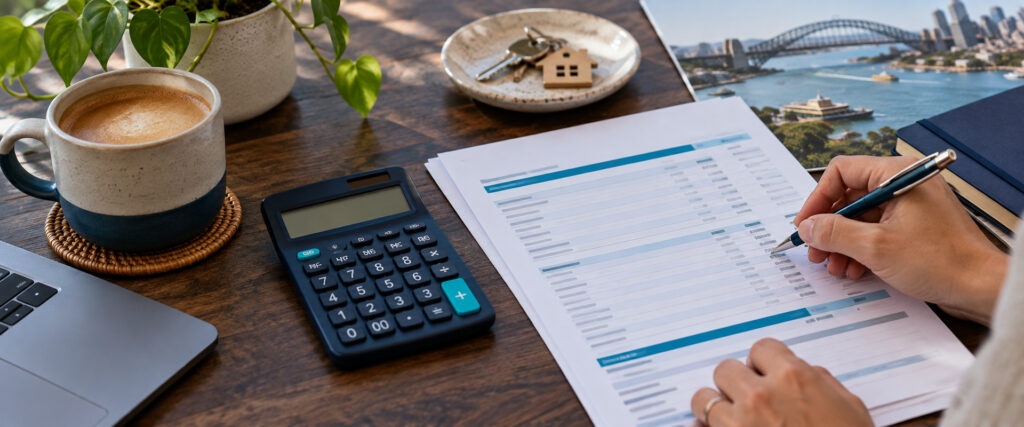
How much deposit for a house in Sydney a lender will accept starts at five per cent of the purchase price. On an eight hundred thousand dollar house that is forty thousand dollars, which is a very different proposition from the hundred and sixty thousand that twenty per cent requires.
The level you choose then decides the cost. Below twenty per cent most lenders require lenders mortgage insurance, though some charge a low deposit risk fee instead, and you pay the premium unless something removes it.
A government guarantee removes it for eligible first home buyers. A profession based waiver removes it for accepted occupations.
The deposit also has to be a deposit the lender recognises, which is a separate test from simply having the money. That catches more applications than the amount itself.
Work from a total cash figure rather than a percentage. The deposit calculator will do it against your own purchase price.
The question is rarely whether you can buy. How much deposit for a house in Sydney you put down decides the cost, and how long the extra saving takes.
| Deposit | What it changes | What it costs you |
|---|---|---|
| Two per cent | Available only under the Single Parent or Legal Guardian Stream | No insurance premium under the scheme, but the stream has its own criteria and you must apply as an individual |
| Five per cent | The common minimum, and the entry point for the government deposit scheme | A premium unless the government deposit scheme or a profession waiver removes it. Pricing tiers are at their least sharp here |
| Ten per cent | A materially smaller premium and access to better pricing tiers | Still insured, but the premium falls faster than the deposit rises |
| Fifteen per cent | A smaller premium again, though pricing tiers are banded rather than smooth | A premium remains, and the rate usually sits in the band above the twenty per cent tier rather than level with it |
| Twenty per cent | No insurance at all, and the sharpest pricing | Only the wait. On a Sydney purchase that wait is frequently years |
The point worth testing is the middle of that table rather than either end. The premium falls as the deposit rises, while rate pricing moves in bands at or about eighty and ninety per cent rather than smoothly.
So the level that suits you depends on where your lender’s bands fall and what the premium would be at each step.
It is worth asking for both figures at two or three deposit levels before settling on a target for how much deposit for a house in Sydney you aim at.
Working out how much deposit for a house in Sydney you need and stopping there is the most common planning error we see. Several other costs fall due in the same fortnight.
How much deposit for a house in Sydney you have saved is only the first line of the budget.
Transfer duty is the largest of the rest, unless a first home buyer exemption applies. Then conveyancing, building and pest inspections, a strata report on a unit, and mortgage registration payable to the state.
Lenders also expect you to still hold funds after settlement rather than spending your entire balance on the deposit. A file with nothing left afterwards reads as higher risk even where the deposit itself is sufficient.
See the property buying cost calculator and the NSW duty rates table.
With a small deposit, many lenders want part of it to be genuine savings. That is a separate test from how much deposit for a house in Sydney you have managed to put together, and almost nobody hears about it until an application stalls on it.
The usual test is funds you accumulated and held yourself, commonly over three months, evidenced by statements. Rent paid on a formal lease is accepted by a number of lenders in place of it.
What generally does not count is a gift that arrived last month, a personal loan, or a lump sum with no history behind it. The funds remain usable for the deposit and still fail this test.
A gift is not a problem in itself. Lenders commonly require a statutory declaration confirming it is not repayable, and some want it to sit alongside a smaller amount of your own accumulated savings.

Working out how much deposit for a house in Sydney you need is the easy part. Four things go wrong between approval and settlement, and all four are avoidable.
The first is a valuation under the contract price. The lender funds its percentage of the lower figure, and the difference comes out of your deposit at short notice.
The second is moving the money. Funds transferred between accounts in the fortnight before settlement can break the savings history a lender has already verified.
The third is new credit. A card, a car loan or a buy now pay later facility taken out after approval changes your assessed position and can require the file to be reassessed.
The fourth is spending the buffer. Lenders expect you to still hold funds after settlement, so a balance emptied by the deposit weakens the file even where the deposit is sufficient.
Four routes reduce how much deposit for a house in Sydney you need to save, and three of them are frequently overlooked.
The government 5% Deposit Scheme lets an eligible buyer proceed at five per cent with no premium, and places are now unlimited rather than rationed. Its Single Parent or Legal Guardian Stream goes to two per cent and does not require first home buyer status.
The First Home Super Saver scheme lets you build part of the deposit inside superannuation.
A family guarantee has a parent pledge security over part of your loan instead of you finding the deposit. And a profession based waiver removes the premium entirely if your occupation is accepted.
See first home buyer lending, the First Home Super Saver scheme and family guarantee lending. Or call +61 447 959 546.
Five per cent is the common minimum, and under the government deposit scheme an eligible first home buyer can proceed at that level with no insurance premium.
Twenty per cent removes the premium without the scheme at all. Between the two, the premium falls as the deposit rises, so the question is usually what each level costs you rather than whether you qualify at all.
It is enough for most lenders to proceed, provided you meet the other tests. What it changes is the cost: without the government deposit scheme or a profession waiver you pay an insurance premium, and the pricing tiers available at five per cent are the least sharp on offer.
It also leaves you with no buffer against a valuation coming in under the contract price.
Yes, and it is common. Lenders commonly require a statutory declaration confirming the money is a gift rather than a loan.
Where the deposit is largely gifted, some lenders also want a smaller amount of your own accumulated savings alongside it, so the gift decides which lender the application should go to rather than whether you can proceed.
No. Transfer duty is a separate cost paid on top, and it is the largest of the extras unless a first home buyer exemption applies to your purchase.
Budgeting a deposit figure without duty, conveyancing, inspections and registration is the most common reason buyers find themselves short in the fortnight before settlement.
Long enough that a great many Sydney first home buyers use the government deposit scheme, a family guarantee or a profession waiver rather than waiting for twenty per cent. Housing Australia has reported scheme use at roughly one in three first home buyers nationally.
The honest comparison is the cost of buying sooner with a premium against the rent you would pay while saving, and that arithmetic depends on your own figures rather than any general rule.
Often, though it has to be checked rather than assumed. The premium is smaller at fifteen than at ten, while rate pricing moves in bands at or about eighty and ninety per cent, so an eighty-five per cent loan usually sits in the band above the twenty per cent tier.
Ask your lender for the premium and the rate at two or three deposit levels and compare the totals.
Current NSW first home buyer duty thresholds and grants are published by Revenue NSW. Confirm your own position before you budget around them.
Paritosh Wadhwani | Director and Principal Broker, APW Finance
Member of the Finance Brokers Association of Australia (FBAA). Arranging residential, commercial and specialist lending for Sydney clients across a panel of more than 50 lenders.
APW Finance Pty Ltd, 304/20a Lexington Drive, Bella Vista NSW 2153. Email: info@apwfinance.com. Phone: +61 447 959 546.
ACN 620 646 479 | ABN 79 620 646 479
This guide is general information only. It does not take into account your objectives, financial situation or needs, and it is not financial or credit advice. Lending criteria, interest rates, duty thresholds and government schemes change, and every application is subject to lender approval.
Consider whether this information suits your circumstances and seek independent advice before acting. Figures quoted are current at the date below and should be confirmed before you rely on them. Last reviewed: October 2026.
APW Finance Pty Ltd delivers expert lending solutions with personalised service, empowering clients across residential, commercial, and business sectors.